




















Do You Need New Radiators for a Heat Pump? Best Options Explained (UK 2026 Guide)

If you're thinking about installing a heat pump in your home, one of the first questions you'll probably ask is:
"Do I need new radiators for a heat pump?"
It's a fair question, and one we get asked all the time.
The short answer is: not always, but in most UK homes, upgrading at least some radiators will make a big difference.
In this guide, we'll break it down in plain English so you can understand:
- Whether your current radiators will work
- What type of radiators are best for heat pumps
- How sizing works (this is the big one)
- What it's likely to cost
Quick Answer: Do You Need New Radiators for a Heat Pump?
In many cases, yes.
Heat pumps run at much lower temperatures than gas boilers. Because of that, your radiators need more surface area to produce the same level of heat.
👉 If your current radiators are:
- Small
- Older
- Single panel
…they're unlikely to perform well with a heat pump.
However, if you've already got modern double panel or larger radiators, you might be fine with just a few upgrades rather than replacing everything.
Why Heat Pumps Change Everything
A traditional gas boiler runs hot, typically around 70-80°C.
A heat pump, on the other hand, usually runs between 35-50°C.
That difference is huge.
Lower temperature = less heat output from the same radiator.
So instead of forcing the system to run hotter (which reduces efficiency), the smarter solution is:
👉 Use larger or more efficient radiators
This is exactly why searches like "radiator for heat pump" and "heat pump compatible radiators" are growing so quickly right now.
Do Heat Pumps Work with Existing Radiators?
Yes, but not always efficiently.
Here are the 3 real-world scenarios we see:
- You Might Not Need New Radiators
If your home is:
- Well insulated
- Already fitted with large double panel radiators
You may be able to keep them and run your heat pump slightly warmer.
- You'll Need to Upgrade Some Radiators (MOST COMMON)
This is what happens in most UK homes.
Typically:
- Living rooms
- Hallways
- Larger bedrooms
…need bigger radiators, while smaller rooms are fine.
- Full Upgrade (Best Performance Option)
If you're renovating or want maximum efficiency:
👉 Replacing all radiators ensures:
- Lower running costs
- Better heat distribution
- Future-proof system
Best Radiators for Heat Pumps (UK 2026)
Not all radiators perform the same when paired with a heat pump. Because heat pumps run at lower temperatures, choosing the right radiator type is key to getting the best performance, efficiency, and comfort in your home.
Below are the radiator styles we most commonly recommend for heat pump systems across the UK, based on real-world performance and customer installations.
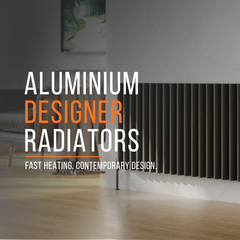
1. Aluminium Radiators (Best Overall)
If you're looking for the best all-round radiator for a heat pump, aluminium is hard to beat.
Aluminium radiators are specifically well-suited to low-temperature systems because they heat up quickly and respond faster than traditional steel radiators. This means your home warms up more efficiently, even when your heat pump is running at lower flow temperatures.
Why aluminium works so well:
- Heats up quickly even at low temperatures
- Highly responsive to temperature changes
- Excellent thermal conductivity
- Lightweight and easy to install
👉 Ideal for modern homes, energy-efficient properties, and anyone upgrading to a heat pump who wants maximum performance.

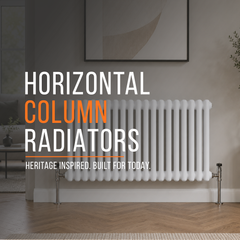
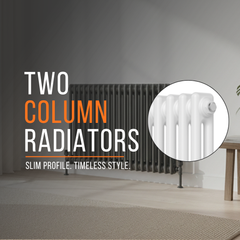
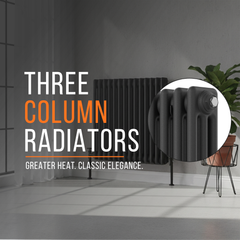
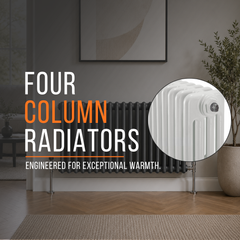
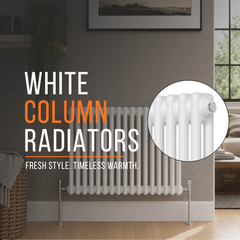
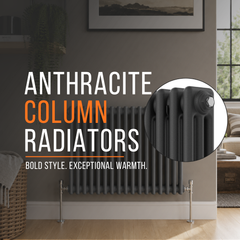
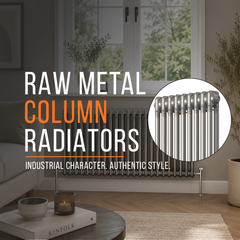
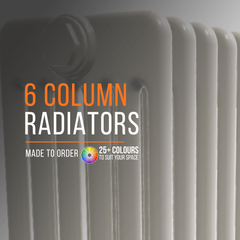
2. Column Radiators (Best for Output + Style)
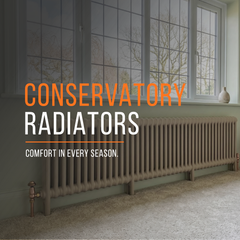
Column radiators are one of the most effective radiator designs for heat pump systems, especially in UK homes where higher heat output is needed.
Thanks to their multi-column structure, they provide a much larger surface area compared to standard radiators. This allows them to deliver strong, consistent heat even at lower temperatures.
They're also a popular choice because they combine performance with a timeless look.
Why they're a great option:
- Large surface area improves heat output
- Excellent performance at lower flow temperatures
- Strong convection helps distribute heat evenly
- Available in both traditional and modern finishes
👉 Perfect for living rooms, older properties, and anyone wanting both performance and visual impact.

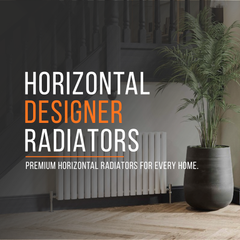
3. Flat Panel & Oval Designer Radiators (Best Modern Alternative)
Flat panel and oval designer radiators are a great option for heat pump systems, particularly in modern homes where aesthetics matter just as much as performance.
When correctly sized, these radiators can work very effectively with lower flow temperatures while offering a clean, contemporary finish that suits today's interiors.
At Designer Radiator Showroom, styles like flat panel vertical radiators and oval designs are becoming increasingly popular for heat pump upgrades.
They offer:
- Sleek, minimalist appearance
- Good heat output when properly sized
- Strong compatibility with low-temperature systems
- A wide range of finishes including anthracite and white
👉 These are especially popular in new builds, renovated homes, kitchens, and open-plan spaces where both design and practicality are important.

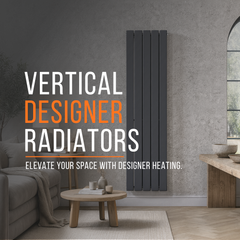
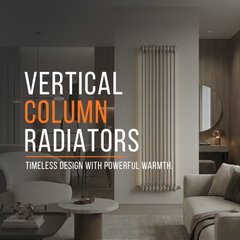
4. Vertical Radiators (Best for Space Saving)
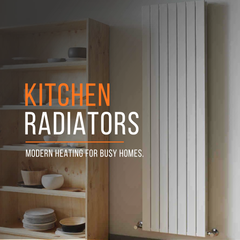
Vertical radiators are an excellent solution for homes where wall space is limited, which is often the case in hallways, kitchens, and smaller rooms.
Because they use height instead of width, they allow you to maximise available space while still achieving good heat output, as long as they are sized correctly for your heat pump system.
They're also increasingly used as a design feature rather than just a heat source.
Best used in:
- Hallways with limited wall space
- Kitchens with cabinets and appliances
- Smaller rooms or awkward layouts
👉 Just remember: with heat pumps, sizing is everything. A taller radiator with enough surface area will perform far better than a smaller, undersized unit.

🔥 The Most Important Part: Radiator Sizing

This is where most people go wrong.
Radiators are usually rated at Delta T50 in UK (standard boiler conditions).
But heat pumps work closer to Delta T30.
👉 That means:
- A radiator rated at 5000 BTU
- Will only give around 3000 BTU with a heat pump
Simple Rule:
👉 You typically need 30-50% more radiator size
What You Should Do:
- Always get a heat loss calculation
- Slightly oversize radiators
- Focus on surface area, not just style
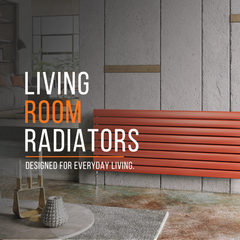
Living Room
The living room is usually the largest and most used space in the house, so it's important to get this right.
With a heat pump, this is where many homes struggle if radiators are undersized.
For best results:
- Go for a large column radiator or aluminium radiator
- Consider two radiators in open-plan or larger rooms
- Focus on higher BTU output and surface area
👉 If your living room feels cold with a heat pump, it's almost always due to undersized radiators.
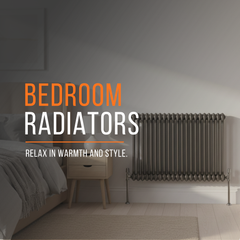
Bedroom
Bedrooms don't need as much heat as living areas, but consistency is key, especially during colder nights.
For most UK homes:
- A vertical radiator or aluminium radiator works well
- Ensure it's correctly sized for the room
- Fit thermostatic radiator valves (TRVs) for individual control
👉 This allows you to keep bedrooms slightly cooler while maintaining efficiency across the rest of the house.
Bathroom
Bathrooms require a different approach, as they need both heat and practicality.
A dual fuel towel rail is the best option for heat pump systems because it gives you flexibility all year round.
Benefits include:
- Works with your central heating system
- Can be used independently in summer
- Keeps towels warm and dry
👉 Always size your towel rail properly, don't choose it based on looks alone, as bathrooms still need sufficient heat output.
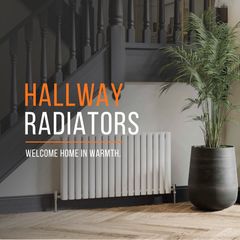
Hallway
Hallways are one of the most overlooked areas in the home but are often the biggest source of heat loss due to draughts from front doors.
A vertical radiator is usually the best choice here because:
- It saves wall space
- Provides good heat output when sized correctly
- Helps maintain a consistent temperature throughout the home
👉 A warm hallway helps stabilise the temperature across adjoining rooms, improving overall system efficiency.
Cost of Replacing Radiators (UK 2026)
Here's a realistic guide:
- Standard radiator: £60 - £200
- Aluminium / designer: £150 - £600
- Installation: £80 - £150 per radiator
👉 Full house upgrade: £1,500 - £4,500
Do Heat Pumps Work Better with Underfloor Heating?
Yes, underfloor heating is ideal.
But realistically:
👉 Most UK homes use a mix of:
- Underfloor heating downstairs
- Radiators upstairs
This works really well.
FAQs
Do I need new radiators for a heat pump?
Usually yes, especially if your current radiators are small or older. Larger radiators improve efficiency and comfort.
What size radiator do I need for a heat pump?
Typically 30-50% larger than standard boiler sizing. A heat loss calculation will give the exact figure.
What is the best radiator for a heat pump?
Aluminium and column radiators are the best options due to their high output at lower temperatures.
Can I use my existing radiators with a heat pump?
Sometimes, but performance may be reduced unless they are already oversized or modern double panel radiators.
Do heat pumps work with radiators?
Yes, they work very well with radiators, as long as they are correctly sized for lower flow temperatures.
Do you need bigger radiators for a heat pump?
Yes. Because heat pumps run at lower temperatures, you typically need larger radiators to achieve the same heat output as a traditional boiler system.
What radiators work best with air source heat pumps?
Aluminium radiators, column radiators, and larger vertical radiators all perform well because they provide a greater surface area for heat output at lower temperatures.
Are old radiators suitable for heat pumps?
Older radiators can work, but they are often undersized or less efficient. Upgrading to modern, larger radiators will significantly improve performance.
Are heat pump radiators more expensive?
Not necessarily. While some designer radiators cost more upfront, they improve efficiency, which can reduce long-term running costs.
How do I know if my radiators are big enough for a heat pump?
The only accurate way is through a professional heat loss calculation. As a rough guide, if your rooms already heat up easily, your radiators may be sufficient.
Can I mix radiators and underfloor heating with a heat pump?
Yes, this is very common in UK homes. Many systems use underfloor heating downstairs and radiators upstairs for the best balance of efficiency and practicality.
What happens if radiators are too small for a heat pump?
Rooms will struggle to reach the desired temperature, especially in winter, and the system may run less efficiently.
Final Thoughts
Switching to a heat pump is a smart move, but getting the radiators right is what makes it work properly.
In most cases:
- You don't need to replace everything
- But upgrading key radiators makes a huge difference
👉 The goal is simple: Lower temperature, bigger surface area, better efficiency
Shop Heat Pump Compatible Radiators
Browse now: our full range of heat pump compatible radiators


